
By the time you reach the final round, nobody is checking whether you can post a journal entry.
The controller interview questions you face test something narrower, and harder to prepare for. Here is what panels look for, and how to answer well.
The questions fall into three groups: technical, leadership and explaining numbers.
What they are actually assessing
The panel is weighing three things, roughly in this order. First, whether you can run the close without supervision. Second, whether you can explain a number to someone outside accounting. Third, whether the team you inherit will still be around in a year.
The technical questions
Expect questions tied to the company, not to a textbook. You may also meet CPA interview questions framed as practical scenarios, such as a one-off item or a disagreement with an auditor.
1. Walk me through your month-end close. How many days, and who does what?
Give the timeline day by day, name who owns each step and state the total days.
2. What did you do to shorten it?
Name one or two specific changes, such as moving a reconciliation earlier, and the days saved.
3. Which reconciliations do you personally review before sign-off?
Name the accounts you review yourself and why they carry the most risk.
4. Tell me about an audit you led. What were the findings and how did you clear them?
Describe the scope, findings and fixes, and be clear about what you owned.
5. Have you worked under IFRS, ASPE or both, and what changed in practice between them?
State which framework you used, then give one practical difference you handled.
6. What is your experience with our ERP, and have you been through an implementation?
Name the systems you know, your role in any implementation and how you would learn theirs.
7. How do you handle revenue recognition in a situation like ours?
Explain the principle first, apply it to their model and say what you would check.
Strong answers are specific. “We shortened the close from twelve days to six by pulling intercompany reconciliations forward and automating the bank feed” works well.
The leadership questions
In any finance manager interview in Canada, leadership is where offers are won or lost, and technically strong candidates underprepare most.
1. How many people have you managed directly, and at what levels?
Give the number, the levels and the structure, and separate direct reports from a wider team.
2. Tell me about someone you developed. Where are they now?
Choose a real person, describe what you did to grow them and share where they are today.
3. Tell me about a performance problem you handled.
Show a calm process: clear expectations, honest feedback, support and a fair outcome.
4. How do you keep a team through a heavy close period without burning them out?
Talk about planning, shared workload, clear priorities and recovery time after the close.
5. You will inherit a team here. What do you do in your first ninety days?
Describe an observant plan: learn the close, meet each person and fix one visible irritation early.
Candidates who promise a department overhaul in month one rarely get offers.
The questions about explaining numbers
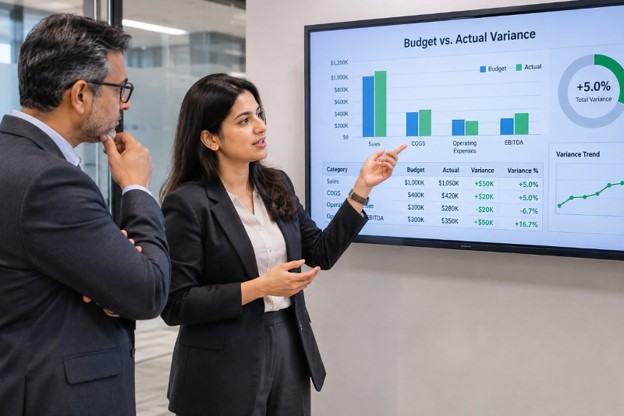
A Controller who cannot translate for non-finance colleagues is a risk, and interviewers test for it. You might hear: tell me about a time you had to explain a variance to an operations leader, or how would you present a cash flow concern to a board that does not want to hear it.
Strong accounting interview preparation means one real story in which your analysis changed a non-finance person’s decision. That single story can answer four different questions.
Questions you should be asking them
Many finance candidates ask too little, and it comes across as low interest. Have six ready and ask at least three.
1. What does the close look like today, and what would you most want improved?
It shows you think about results, and the answer reveals where the pressure sits.
2. Why is this role open? Is it growth, a replacement, or a restructure?
It shows whether you are joining a growing team or inheriting a problem.
3. Who does this role report to, and how often do they want to see me?
It shows how much support and visibility to expect.
4. What does the audit relationship look like, and when did you last have a material adjustment?
It reveals the quality of the numbers you would inherit.
5. What would make the first year a success in your view?
It tells you what the company will measure.
6. What is the finance team’s reputation internally right now?
It often draws an unusually honest answer.

The mistake that costs people the offer
The mistake is vague ownership. Finance professionals are trained to say “we”, and in interviews that habit works against them. If the panel cannot tell whether you ran the close or helped with it, they assume the smaller role.
Say plainly what was yours. “I owned the consolidation and the audit file, and my Senior Accountant owned AP and payroll” is not arrogance. It is clarity.
Conclusion: Before the interview
Good preparation is mostly about facts you can say out loud. Read the latest financial statements, and keep your close timeline, team size and systems ready as figures. If a recruiter put you forward, ask what is on the hiring manager’s mind.
At HireLoft, we brief our finance candidates before they walk in, so they know what the panel is likely to probe. Send us your resume through our website, and we will prepare you properly.
FAQs
1. What are the most common controller interview questions?
Expect questions on your month-end close, audits, IFRS or ASPE, ERP systems and revenue recognition, plus questions on team leadership and explaining numbers to non-finance colleagues.
2. How should I prepare for a finance manager interview in Canada?
Read the company’s latest financial statements and have your close timeline, team size and systems ready as figures. Prepare one real story where your analysis changed a non-finance decision.
3. What leadership questions come up in a controller interview?
Panels ask how many people you have managed, someone you developed, a performance problem you handled and what you would do in your first ninety days.
4. What questions should I ask at the end of a controller interview?
Ask what the close looks like today, why the role is open, who it reports to and what a successful first year would look like.
5. What is the biggest mistake candidates make in finance interviews?
Vague ownership. Saying “we” for everything hides what you did, so state plainly which work was yours.